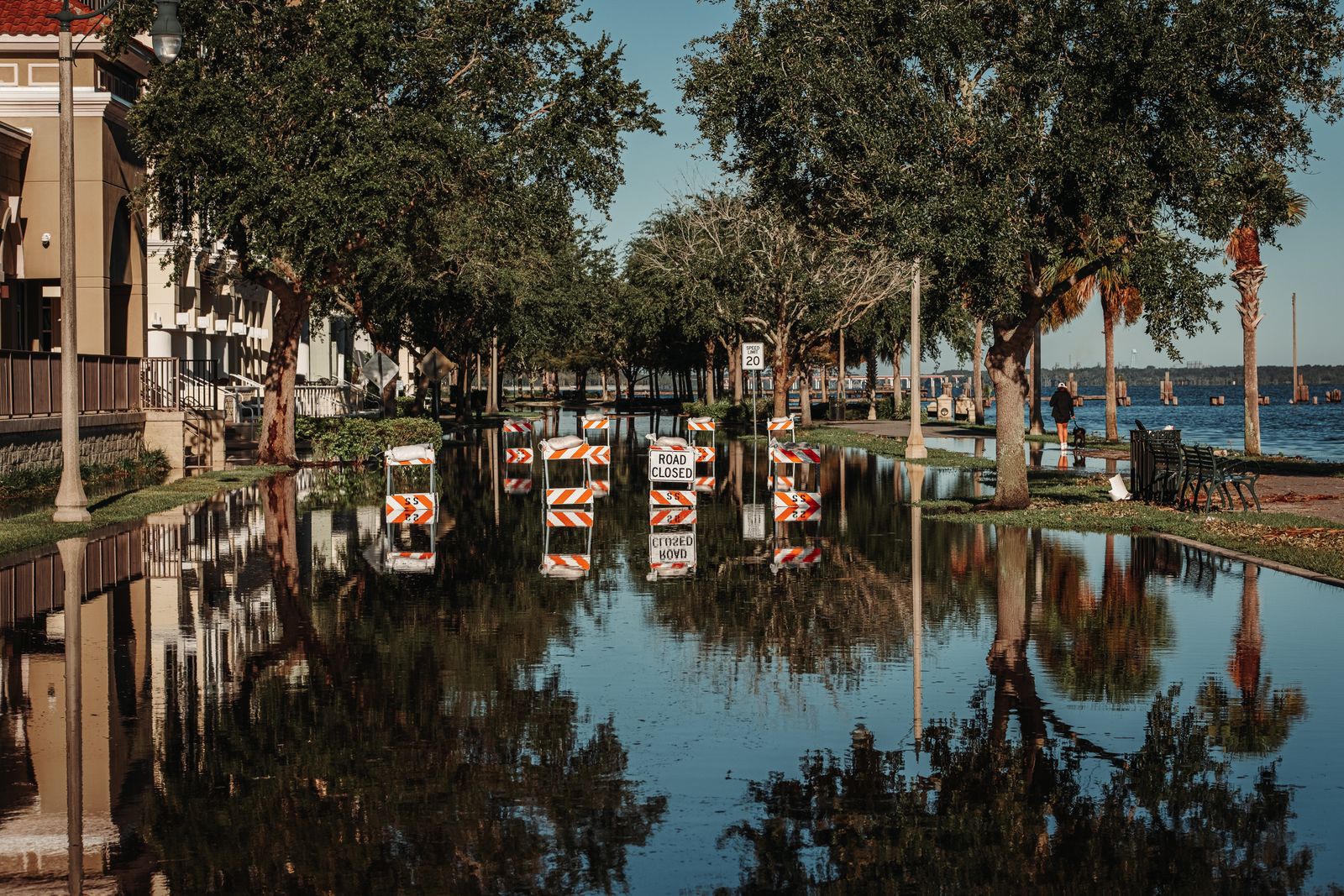
In Australian home insurance, “flood”, “storm” and “escape of liquid” are usually three different events, and your policy may cover one, two or all of them. Flood generally means water from a natural watercourse, lake, dam or reservoir rising over normally dry land. Storm usually covers rain, wind and hail getting in. Escape of liquid usually means water leaking from something inside the home, like a burst pipe or a failed appliance.
The label your insurer applies can decide whether you’re covered, so this guide explains each term, how they overlap, and what you can do today to describe your damage accurately.
What counts as “flood” in Australian insurance?
Australia has a standard definition of flood used across home and contents policies. In plain terms, it’s the covering of normally dry land by water that has escaped or been released from the normal confines of a natural watercourse, lake, reservoir, dam, canal or similar.
That means a creek or river breaking its banks and running through your yard and into the house is typically “flood”. Many policies include flood cover by default, but some let you remove it, and some exclude it. The only way to know is to read your Product Disclosure Statement (PDS) or ask your insurer directly.
Good to know: If your street sits near a river or creek, such as parts of the Maribyrnong valley, it’s worth checking your flood cover before the next wet season, not after. Our Maribyrnong flood restoration page covers local issues.
How is storm damage different from flood?
Storm damage is usually caused by the weather event itself: heavy rain, strong wind, hail or a storm surge in some policies. Common examples include:
- rain coming through a roof after wind lifts tiles or sheeting
- a tree branch smashing a window and rain getting in
- gutters and downpipes overflowing in a downpour and water entering wall cavities
- flash flooding from stormwater run-off that isn’t from a watercourse
That last one causes real confusion. Water pouring down a sloping street and under your front door during a cloudburst may be treated as storm or rainwater run-off rather than flood, depending on the policy wording. Each insurer defines these terms in its own PDS, so check yours.
Some policies also exclude damage that happens gradually, or damage linked to poor maintenance, such as long-blocked gutters. If you have storm damage and a roof leak, our guide to storm damage and roof leaks covers make-safe steps.
What does “escape of liquid” mean?
Escape of liquid (sometimes called “escape of water”) usually covers water that suddenly leaks from a fixed pipe, tank, appliance or fitting inside the property. Typical examples are a burst flexi hose under the sink, a split washing machine hose, a leaking hot water system or a failed dishwasher.
Policies often cover the water damage to floors, walls and contents, but may not cover the cost of fixing the item that leaked. Many also exclude slow leaks that went unnoticed for weeks, such as a shower that has been seeping into the subfloor. Again, the wording varies, so read the relevant section of your PDS.
Why does the wording matter so much?
Because the cause decides which part of your policy applies. A home could have storm cover but no flood cover, or escape of liquid cover with an exclusion for gradual leaks. The same wet carpet might be covered under one heading and not under another.
The cause also affects how the cleanup is done. Floodwater and stormwater that has run across the ground is treated as contaminated (black water, or category 3), while water from a burst supply pipe usually starts as clean water (category 1). That affects whether carpets and underlay can be saved and what sanitising is needed.
What should you record to help your insurer decide?
You don’t decide the cause; your insurer and their assessor do. But clear evidence from the day helps them get it right. Here’s what to do tonight, if it’s safe:
- Photograph where the water came in: the door, the roof cavity, the wall, the appliance, the pipe.
- Take wide shots of each affected room, then close-ups of damage and water lines on walls.
- Note the time you first noticed water and what the weather was doing.
- If a creek or river nearby was rising, take a photo or note it.
- Keep any failed part, such as a split hose or broken fitting, in a bag.
- Write down what you did to stop the water and limit damage.
- Call your insurer, describe what happened in plain words, and ask which cover they think applies.
Tip: Describe what you saw, not what you think the label should be. “Water came under the back door during heavy rain” is more useful than guessing at a category.
For a fuller list, see our water damage insurance claim tips.
When to call a professional
Some situations are fine to handle yourself, like a small spill on tiles that you can mop up and dry within a day. Call in help when:
- water has soaked into carpet, underlay, plasterboard or subfloor
- the water came from outside (flood or storm) and may be contaminated
- more than one room is affected
- you need moisture readings and photos for an insurer
Our water extraction service removes standing water quickly and then measures moisture with meters and thermal imaging. We document everything with photos, moisture readings and a drying report, and we can work directly with your insurer or assessor. If walls and floors stay wet after extraction, we follow on with structural drying.
If floodwater is rising or you’re in danger, call 000. For flood and storm emergency help, contact VICSES on 132 500.
Not sure what kind of water damage you have?
You don’t need to have the insurance terms worked out before you call. Tell us what happened and we’ll help you capture the right evidence while the water is still being removed. Call us any time, or use the form below to request a call back.
Frequently asked questions
Is flood cover automatic on Australian home insurance?
Not always. Many home and contents policies include flood cover, but some allow you to opt out and some exclude it. Check your PDS or certificate of insurance, or ask your insurer to confirm in writing.
Is water coming under the door in a storm a flood?
It depends on where the water came from and on your policy wording. Run-off from heavy rain is often treated differently from a river or creek overflowing. Your insurer will decide, so give them photos and a clear description of what you saw.
What if I disagree with how my insurer has classified the damage?
Ask for the decision and reasons in writing, then use your insurer’s internal complaints process. If that doesn’t resolve it, you can take the dispute to the Australian Financial Complaints Authority, which is free for consumers.