If a storm has damaged your roof and water is leaking inside, stay off the roof, keep people away from wet ceilings and light fittings, and catch the water with buckets and tarps. For storm damage that needs urgent help, such as a tree on the house or a roof opened up by wind, call VICSES on 132 500. Call 000 if anyone is in danger. Once the storm passes, the roof needs a make-safe and the inside needs drying before mould and ceiling damage set in.
Below is what to do while it’s still raining, who to call, and what happens after.
What should I do while it’s still raining?
You can’t fix a roof in a storm, but you can limit the damage inside.
- Stay off the roof and away from ladders. Wet tiles and sheeting are slippery, and wind makes it worse.
- Keep clear of sagging or bulging ceilings, and don’t use light switches near water.
- Turn off the power to affected rooms at the switchboard if you can do it from a dry spot. If not, leave it and call an electrician.
- Catch and contain water. Put buckets under drips and plastic sheeting or tarps over the floor and furniture.
- Move valuables and electronics out of the affected rooms.
- Take photos and video of the leaks, the ceiling, the outside of the house and any fallen branches or debris.
- Call your insurer to start a claim as soon as you can.
Warning: Stay well away from fallen powerlines. Treat them as live and call 000.
Who should I call for storm damage?
It depends on how urgent and how serious the damage is.
- 000: anyone injured or trapped, a fire, or fallen powerlines.
- VICSES (132 500): emergency help during floods and storms, such as a tree on the house or a roof badly damaged by wind. VICSES volunteers can help with temporary protection in an emergency, but they don’t do permanent repairs.
- Your insurer: to report the claim and ask what they’ll arrange.
- A make-safe and restoration service: for temporary protection, water removal, drying and getting the house ready for repairs.
- A licensed roofer or builder: for permanent roof repairs.
- An electrician: if water has reached wiring, light fittings or the switchboard.
During big storm events, demand on everyone is high, so start calls early and keep a note of who you’ve spoken to.
What causes a roof to leak in a storm?
Knowing the likely cause helps your insurer and your repairer. Common storm-related causes include:
- Tiles cracked, lifted or slipped by wind or hail
- Metal sheeting lifted or screws pulled loose
- Flashings around chimneys, skylights and walls bent or torn
- Gutters, box gutters and downpipes blocked by leaves and overflowing into the roof space
- Branches or debris puncturing the roof
Good to know: Leaks from blocked gutters or old, worn roofing may be treated differently by insurers compared with sudden storm damage. Photos of the roof and gutters help show what happened.
For more on stopping water at ceiling level, read water coming through the ceiling.
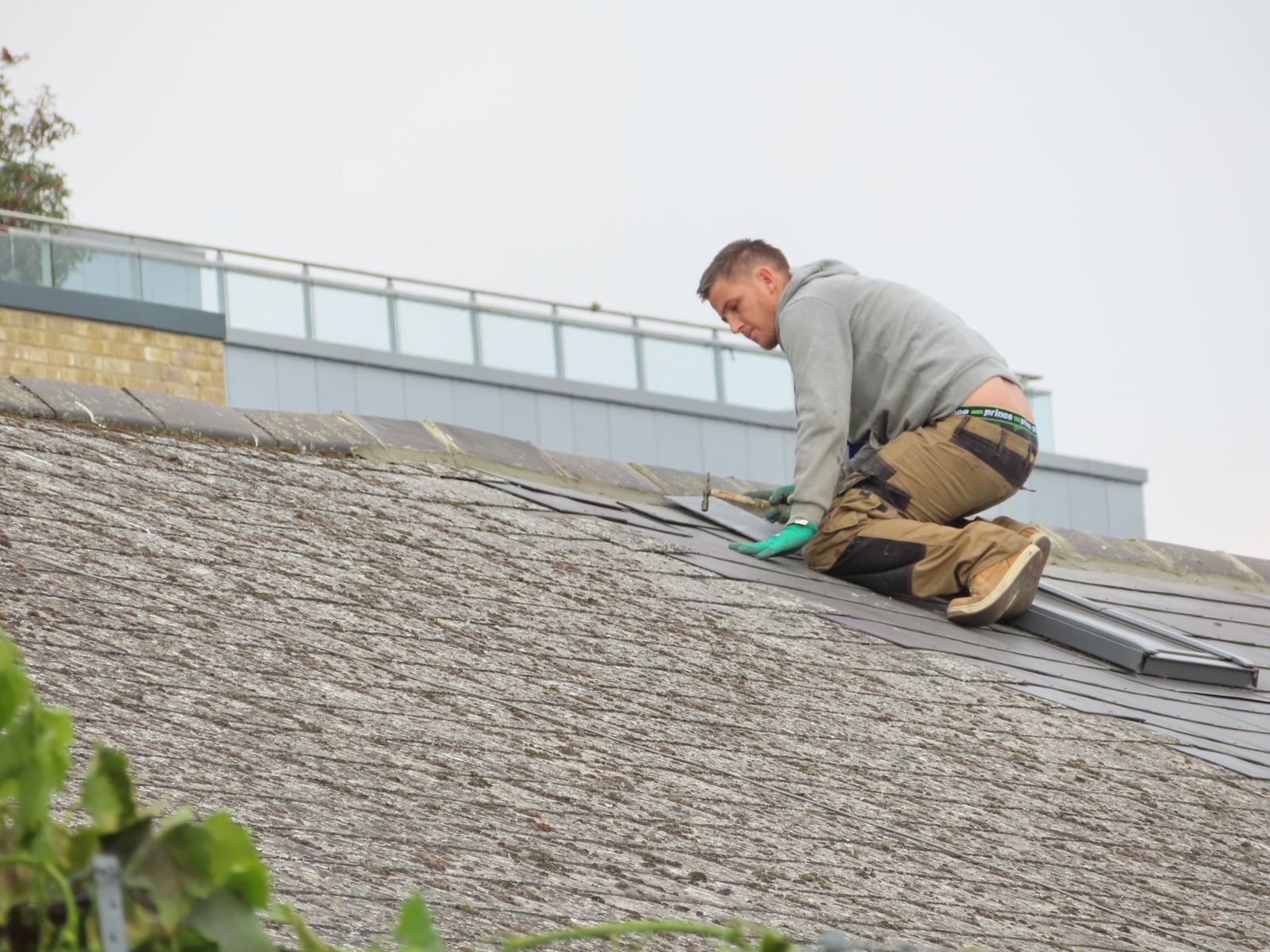
What does a make-safe involve?
A make-safe is temporary work that protects the house and the people in it until permanent repairs can be done. It’s not the final fix.
Depending on the damage, it may include:
- Covering damaged roof areas with tarps or temporary sheeting
- Removing or securing ceiling plaster that’s sagging or at risk of falling
- Removing soaked insulation from the roof space
- Extracting water from carpets and floors
- Setting up drying equipment
- Boarding up broken windows or doors
The goal is to stop more water coming in and stop the damage already inside from spreading. Ceilings, insulation and wall cavities that stay wet can grow mould within 24 to 48 hours, and wet plasterboard can lose strength.
Will insurance cover storm damage to my roof?
Many home insurance policies cover storm damage, but the details depend on your policy. Storm cover is often separate from flood cover, and insurers may look at whether the roof and gutters were maintained. Our guide to flood vs storm vs escape of liquid explains why the wording matters.
Check your PDS, report the claim early and keep every photo, invoice and report. Most insurers expect you to take reasonable steps to prevent further damage, which is what a make-safe does.
When to call a professional
If a single small drip appeared during heavy rain, stopped when the rain stopped and left the ceiling firm and dry, you may only need a roofer to check the roof.
Call a professional when:
- Water has come through in more than one place, or keeps coming
- The ceiling is stained, sagging or soft
- Carpet, walls or contents are wet
- Insulation in the roof space is soaked
- You need the damage documented for your insurer
FRS provides 24/7 make-safe and repairs across Melbourne after storms, including temporary protection, ceiling make-safe, water extraction and structural drying. We use moisture meters and thermal imaging to find water in ceilings and walls, take photos and readings for your claim, and provide a written scope and price before major work. We can also work directly with your insurer or assessor.
Once the house is safe and dry, it’s worth a look at gutters, downpipes and the roof before the next storm season. Our guide to preparing your home for storm season in Melbourne has a simple checklist. If you’re dealing with storm damage now, call us any time or use the form below.
Frequently asked questions
Will VICSES fix my roof?
VICSES can help in an emergency, such as placing a temporary tarp on a storm-damaged roof, but they don’t do permanent repairs. You’ll still need a roofer or builder, usually arranged through your insurer.
Can I put a tarp on my roof myself?
It’s not recommended, especially in wet or windy weather. Falls from roofs and ladders are a serious risk. Leave roof work to VICSES in an emergency, or to a professional once conditions are safe.
How soon after a storm should I dry out the house?
As soon as it’s safe to do so. Wet ceilings, insulation and carpet can start growing mould within 24 to 48 hours in damp conditions, and delays can make more materials unsalvageable.